In This Article
- Why trust has to be built deliberately before you ever make an offer
- The two extremes most service providers fall into, and why neither works
- The five emails that make up a trust-first nurture sequence, and the specific job each one does
- How to space your emails, and why an unsubscribe link actually builds trust
- How often to stay in touch after the sequence ends, and why more isn’t always better
You finally created that freebie, and people are downloading it. That part feels good. But what you send after someone enters their email, your nurture sequence after the freebie, is where most service providers quietly lose the trust they just started to build.
Do you recognize yourself in one of these two situations?
- Either nothing happens. The download lands, and then… silence, no follow-up, no system, nothing building behind it.
- Or the opposite happens. One email goes out, and it already asks for the sale, a pitch for your premium coaching package before you’ve said more than a few words to each other.
They’re completely different mistakes, but they come from the same place, and neither one has to be the way you do this. There’s a simpler, more trust-first way to turn a download into a real relationship, and that’s what we’re getting into here.
Why Trust Has to Come Before the Offer
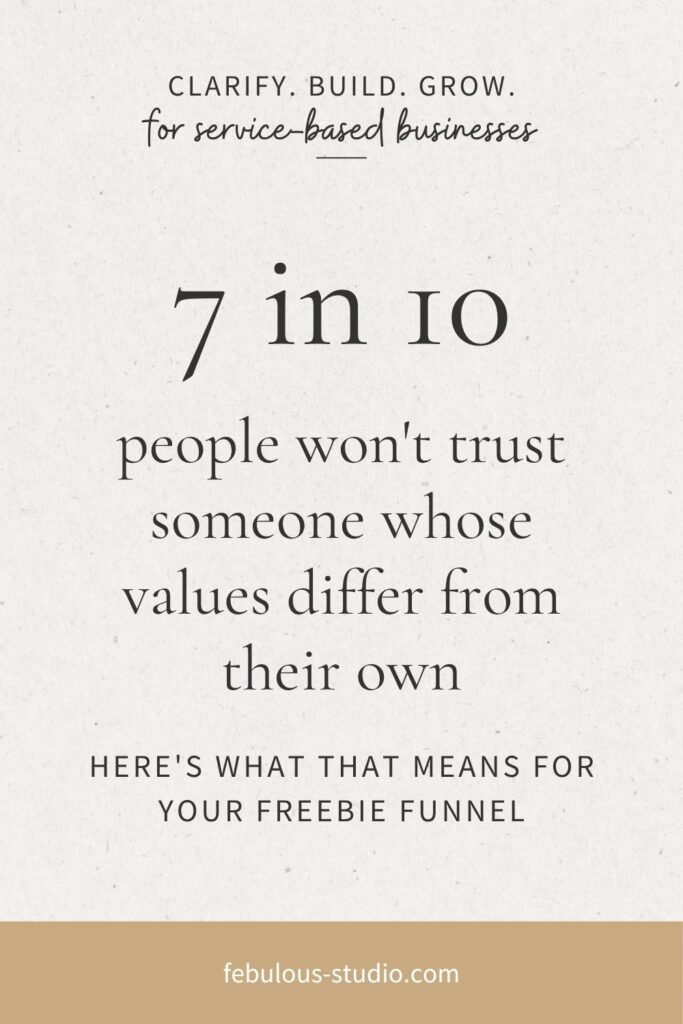
Here’s why this matters more than it might seem. According to the 2026 Edelman Trust Barometer, 7 in 10 people are hesitant to trust someone whose values differ from their own. Think about what that means for your business. The people downloading your freebie don’t know yet whether you share their values, whether you actually understand their world, or whether you’re safe to invest in. That trust doesn’t happen in one email, and it definitely doesn’t happen by accident.
For a mission-led service provider, this is the whole game. You’re not selling a quick, impulse-buy product, you’re asking someone to invest real money, sometimes a significant amount, in working closely with you. That kind of decision needs more than a good freebie and a single follow-up. It needs a sequence of small, honest moments that let someone feel, not just hear, that you’re aligned with what matters to them. Skip that, and you’re not just losing a sale, you’re losing the relationship before it even started.
The Five-Email Sequence
Email 1: The Welcome
When: Right after the download.
Its job: Get them to actually open and use what you gave them.
A freebie sitting unread in an inbox builds no trust at all. So:
- Be realistic about how long it takes.
- Make it feel doable, without pressure.
- Remind them what transformation is waiting if they follow through.
This is also where you start putting a face to the name. Even just a photo of you goes a long way. It doesn’t need to be a video, but people need to see you to start trusting you.
Two things happen here:
- The first small act of generosity. You offer something useful and help them get real value from it.
- The first repeated contact. This builds familiarity, the psychological effect where the more someone sees you in a low-pressure way, the more they trust you.
No pitch here. Just warmth, a face, and a nudge to take action.
Email 2: The Story
Its job: Shift from delivering value to deepening connection.
Share a real moment:
- Why you do this work
- A struggle you’ve lived through that’s close to theirs
- The mission that drives your business
This is where it helps to be specific. Whether your purpose is protecting the environment, animal welfare, helping people heal, supporting a more conscious way of doing business, or anything else you care about, name it clearly.
People don’t just connect with what you do. They connect with people who share their values. That shared sense of purpose is what makes someone feel safe choosing you over anyone else.
You’re being vulnerable and human here, not just useful. That’s what builds real liking and trust.
Still no pitch. This email’s only job is to make them feel like they know you, and what you stand for, a little better.
Email 3: The Proof
Its job: Now that they know a bit about you and what you stand for, gently show that your approach works.
Share one of these:
- A client transformation
- A specific result
- A moment where your way of doing things made a real difference
Keep it honest and specific rather than polished and vague. A real story will always build more trust than a generic success claim.
Still not a pitch. There’s nothing to offer here beyond the proof itself. Let the story speak for itself, and let them imagine what might be possible for them too.
Email 4: The Invitation
Its job: This is the first time you gently open the door. Not with a hard pitch, but by letting them know what working with you actually looks like.
Don’t introduce every offer or program you have. Pick the one that’s the most natural next step after the freebie they downloaded. That’s almost certainly the problem they’re ready to solve.
Share:
- What that offer solves
- Who it’s for
- What changes for someone who says yes
You’re not pushing. You’re simply making it clear that this path exists for them if they’re ready.
The trust you’ve built over the last three emails is what makes this feel like a natural next step, rather than a sales ambush.
Email 5 (Optional): The Nudge
The first four emails are the real core of the sequence. If you feel those four are enough for someone to start trusting you, that’s enough. No one needs to be spammed.
But if you want to go a little deeper, this is where a fifth email can help.
Its job: It isn’t about convincing. It’s about making it easy to take the next step if they’re already leaning that way.
- Answer a common hesitation.
- Offer a simple way to ask a question or have a conversation.
- Remind them gently that there’s no rush, you’re not going anywhere.
If you do include it, it closes the sequence the way it opened: with warmth rather than pressure.
Making It Work: Spacing, Unsubscribe, and What Comes After
A few practical notes to make this work well. Spacing matters as much as content, give each email room to breathe, roughly two to four days apart rather than back to back, so the relationship builds naturally instead of feeling like a flood. Always include a clear, simple unsubscribe link in every email, not just because it’s required, but because trust means respecting someone’s choice to leave if this isn’t for them.
And once the sequence ends, what then? A lot of marketing advice will tell you to email your list weekly, the logic being that more inbox visibility equals more sales. That might work for some businesses, but for mission-driven service providers building real trust, it can easily backfire, it starts to feel like noise instead of connection. Monthly, or bi-monthly if you genuinely have enough value to share, tends to respect your audience’s attention while still keeping you present in their world.
Conclusion
Building trust with someone who just downloaded your freebie doesn’t require a complicated funnel or a pushy pitch. It just requires a handful of honest, well-timed moments that let someone see who you are and what you stand for, before you ever offer them anything. If you’ve been stuck between sending nothing at all and jumping straight to the sale, you now have a simpler path, and you’re not behind, you’re just getting started on doing this the right way.
If you don’t have a nurture sequence like this yet, a great place to begin is with The Visibility Journal, my monthly newsletter helping mission-driven founders grow their visibility without compromising on their values. And if you’re ready to go deeper and build this properly for your own business, values, and offer, let’s have a conversation about what that could look like for you.
FAQ
How long should a nurture sequence be?
Four to five emails is the sweet spot for service-based businesses. Four covers the essentials, five gives you a little more room to build trust before inviting someone into a bigger offer.
Do I need fancy email automation software to set this up?
Not at all. Most email platforms, even free ones, let you set up a simple automated sequence, tools like MailerLite, Mailchimp, or MailPoet if you’re on WordPress all handle this well. What matters far more than the tool is the thinking behind each email.
What if someone doesn’t open any of my emails?
That’s normal, and it doesn’t mean the sequence failed. Not everyone is ready right away, and staying present without pressure means you’ll be there when they are.